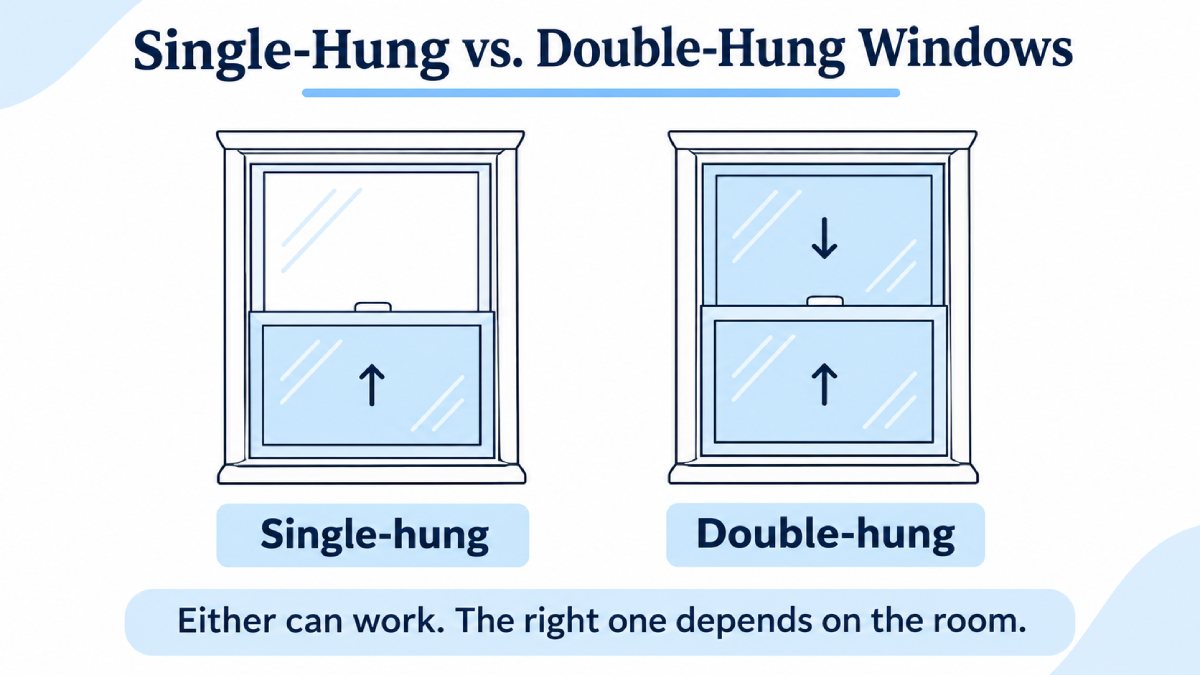


The difference between single hung vs double hung windows comes down to how many sashes move. On a single-hung window, only the bottom sash moves and the top stays fixed. On a double-hung window, both sashes move, and both usually tilt inward for cleaning. There are also differences in cost, moving parts, cleaning, and ventilation.
The right choice also depends on the room, because bedroom windows in California generally must meet escape-size rules.
Single Hung vs Double Hung Windows Differences
|
Row |
Single-hung |
Double-hung |
|
Moving sashes |
Bottom sash only. Top sash is fixed |
Top and bottom sashes both move |
|
Upfront cost |
Usually lower |
Usually higher |
|
Airflow |
Air enters through the bottom opening |
Can open the top, the bottom, or both |
|
Cleaning |
Bottom sash may tilt in on some models. The outside of the fixed top sash needs outside access |
Both sashes usually tilt in, so both sides of the glass can be cleaned from inside |
|
Energy |
A fixed top sash can mean fewer air paths |
Two moving sashes mean more seals to keep in good shape |
|
Bedroom escape (egress) |
Only the bottom sash opens, so the frame must be tall enough |
Only about half the window opens, so the frame must be tall enough |
|
Child safety |
Opens at the bottom only, so add window stops |
Top sash can open while the bottom stays closed, and window stops still help |
|
Moving parts to repair |
Fewer |
More |
|
Often a good fit |
Budget rooms, ground floor, over a sink, accessory dwelling units (ADUs) |
Upstairs rooms, rooms that need strong airflow, homes with young children |
Operable Sashes
A single-hung window has one operable sash, and a double-hung window has two.
On a single-hung window, only the bottom sash needs a track, a lock, and a balance. A balance is the spring or cord system that holds a raised sash in place.
On a double-hung window, each sash has its own balance, so either one can be raised or lowered and stay put. Many double-hung sashes also unlatch and tilt inward, and some single-hung bottom sashes do too, so the spec sheet of the exact model settles it.
Ventilation
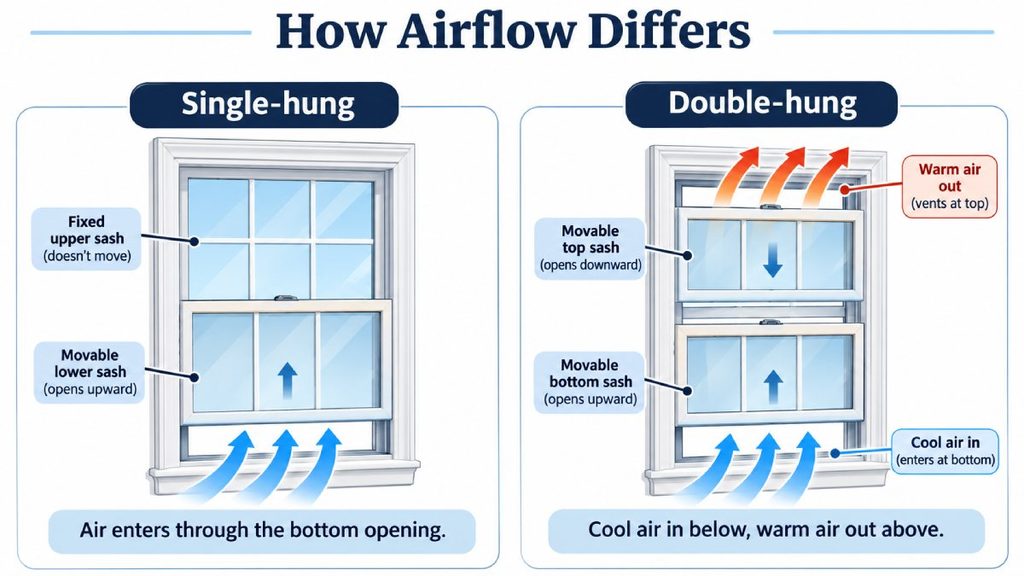
Double-hung windows offer more ventilation options because either sash can open. If you lower the top sash slightly and raise the bottom sash slightly, warm air, which is lighter, leaves through the top gap while cooler air enters at the bottom.
A single-hung window supplies air through the bottom opening only, which is enough for most rooms. If airflow is the main goal, a casement or awning window opens wider than either hung style.
Cleaning
Double-hung windows are usually easier to clean. Both sashes usually tilt inward, so the outside face of the glass can be reached from inside the room.
On a single-hung window, the outside face of the fixed top sash can only be reached from outside on a ground floor that is easy. Upstairs, it can mean a ladder, a long-handled tool, or a hired cleaner.
Energy Efficiency
Neither style is clearly more energy efficient. The one built-in difference is the number of moving seals. A single-hung window can leak air at one set of seals. A double-hung window can have more places to leak as the weather-stripping wears.
Well-kept seals on either style can still perform well, so the label on the exact window tells you more than the style does.
Window frame materials matter too. Metal frames conduct heat easily, so aluminum windows rely on a thermal break, a plastic strip that separates the inner and outer metal, while vinyl, fiberglass, and wood slow heat on their own.
Cost
The difference between single hung vs double hung windows cost is rather simple. Single-hung windows usually cost less than double-hung windows because they have fewer moving parts.
On most models, the style differences that affect price are:
- Balances: One on a single-hung window, two on a double-hung window.
- Tracks and Locks: Fewer on a single-hung window, since the top sash does not move.
- Top Sash: Fixed on a single-hung window, so it needs no moving hardware.
- Tilt-in Latches: Usually on the bottom sash only for single-hung, on both sashes for double-hung.
- Weather Seals: Fewer on a single-hung window, since only one sash moves.
- Repairs: Fewer parts to wear out on a single-hung window, so upkeep can cost less.
Frame material, glass, size, finish, and installation can affect both styles, so compare quotes for the same size, frame, and glass, with installation listed as its own line.
Bedroom Egress
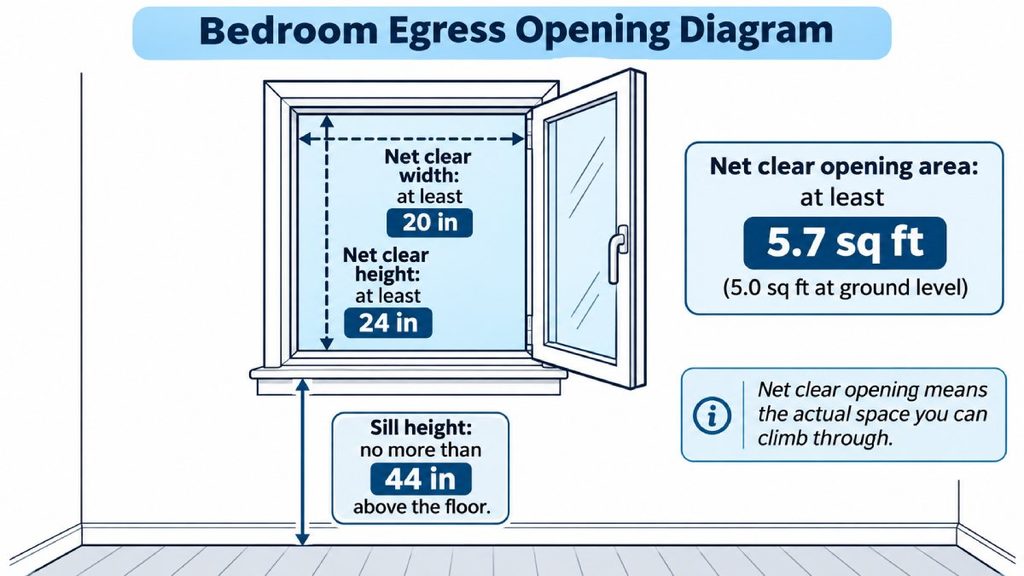
Single-hung or double-hung windows can both serve as bedroom escape windows, if the open sash is large enough. Only about half of either style opens, so the frame has to be tall. Under the California Residential Code, sleeping rooms generally need at least one emergency escape and rescue opening, with limited exceptions.
The 2025 California codes, as summarized by OC Public Works, set four limits on the net clear opening, which is the space a person can climb through, not the size of the glass:
- Area of at least 5.7 square feet, or 5.0 at ground level.
- Open height of at least 24 inches.
- Open width of at least 20 inches.
- A bottom edge no higher than 44 inches above the floor.
The table shows the open height you need at each open width. Many hung windows open about half their height, so check the net clear opening on the spec sheet for the exact size.
|
Net clear width (in) |
Height needed for 5.7 sq ft (in) |
Height needed for 5.0 sq ft, ground level (in) |
|
20 |
41.1 |
36.0 |
|
22 |
37.4 |
32.8 |
|
24 |
34.2 |
30.0 |
|
28 |
29.4 |
25.8 |
|
32 |
25.7 |
24.0 |
|
36 or wider |
24.0 |
24.0 |
Child Safety & Security
Window stops are a key safety measure on either style. The CPSC reports that about 5,600 children aged 12 and under were treated in emergency departments after a window fall in 2024. It advises fitting stops or guards so a window opens no more than four inches, and opening windows from the top when possible.
Double-hung windows may be slightly safer because the top sash can open while the lower opening stays closed. A single-hung window has no top opening, so a stop on the bottom sash matters even more. In a bedroom, any stop or guard still has to let an adult open the window quickly from inside.
Home Style and Looks
The two styles look almost the same from outside when closed, so style rarely changes the look of a home. Frame color, grid pattern, and profile shape the look far more than the number of moving sashes. Color and finish options differ by the manufacturer.
Single Hung vs Double Hung Windows: How to Choose?
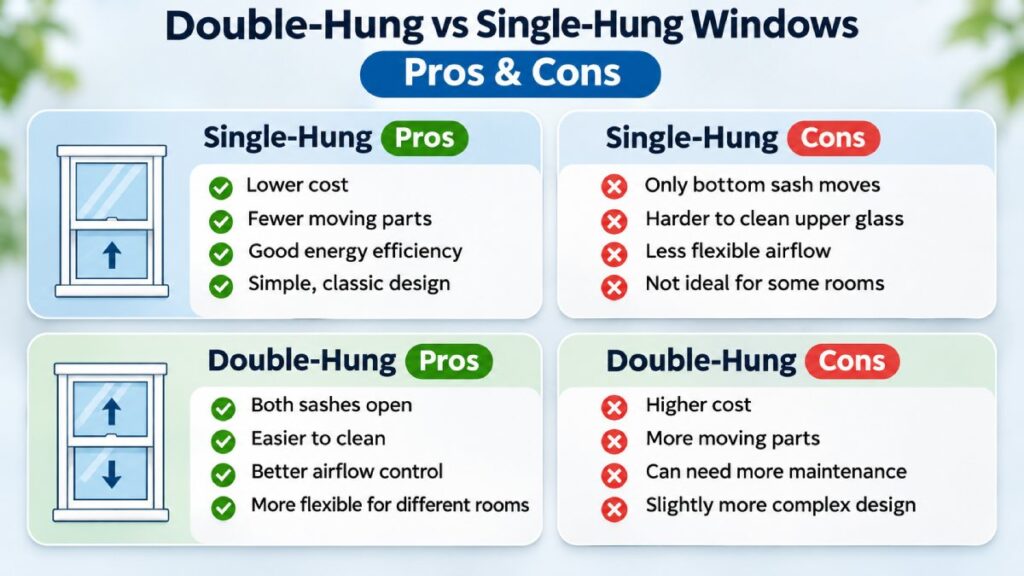
The choice comes down to access and airflow. Single-hung suits easy-to-reach spots where cost matters most. Double-hung suits hard-to-reach glass and rooms that need airflow control. Check bedroom egress size and the label numbers before you order.
Choose Single-Hung If
Single-hung fits when cost and simplicity matter more than cleaning access or airflow control. It suits these rooms:
- Ground-floor rooms, where the whole window is easy to reach.
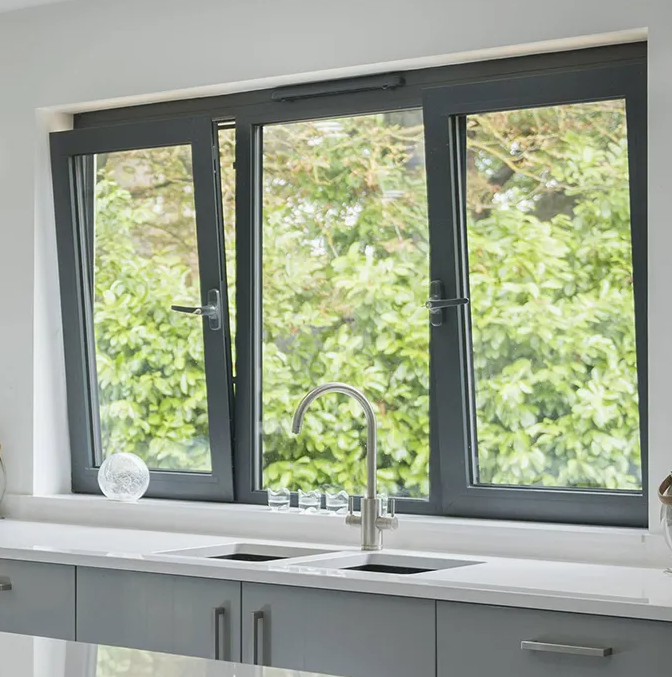
- Kitchen windows over a sink, where a fixed top sash removes a second sash that would be hard to reach.
- ADUs, which are small second homes on the same lot.
- Rental units.
It also suits these needs:
- A lower upfront cost.
- Usually fewer moving parts to repair.
- Bottom ventilation that is enough for the room.
Choose Double-Hung If
Double-hung fits when you need to reach the glass from inside or control how air moves. It suits these rooms:
- Upstairs rooms, where the outside of a fixed top sash is hard to reach.
- Bathrooms and laundry rooms, where opening the top sash lets warm, humid air out.
- Rooms of young children, where the top sash can open while the bottom stays closed, with a window stop fitted.
It also suits these needs:
- Cleaning both sides of the glass from inside.
- Opening the top, the bottom or both for airflow.
- Fitting stops on the bottom sash, so the window can still vent from the top.
Room-by-Room Guide
Pick by room, using the table below, and treat it as a starting point, not code advice.
|
Room |
Often a good fit |
What to check |
|
Bedroom |
Either, if the open sash is large enough. Casement if the frame is short |
Egress size rule and window stops |
|
Kitchen over a sink |
Single-hung, or an awning or casement window |
Bottom ventilation is usually enough. Levers on a double-hung top sash can be hard to reach |
|
Bathroom |
Either |
Ask the building department about safety glazing, and consider privacy glass |
|
Upstairs hallway or room |
Double-hung, or single-hung with a tilt-in bottom sash |
Cleaning access to the top sash and stops for children |
|
Living room or ground floor |
Single-hung |
Cost and simplicity lead. Check the label numbers |
|
ADU or rental |
Single-hung |
Budget and quick installation. Bedroom egress and the California energy limits still apply |
Buying a Single-Hung Window in Los Angeles, California
Check three things before you order, whichever style you pick:
- * That the window meets California’s Title 24 energy limits, which set a maximum U-factor and SHGC by climate zone; check the NFRC label against the limits for your zone.
- That you have a permit if your city requires one, since many California cities do for window replacement.
- That your contractor holds a C-17 glazing license, which you can look up with the Contractors State License Board (CSLB).
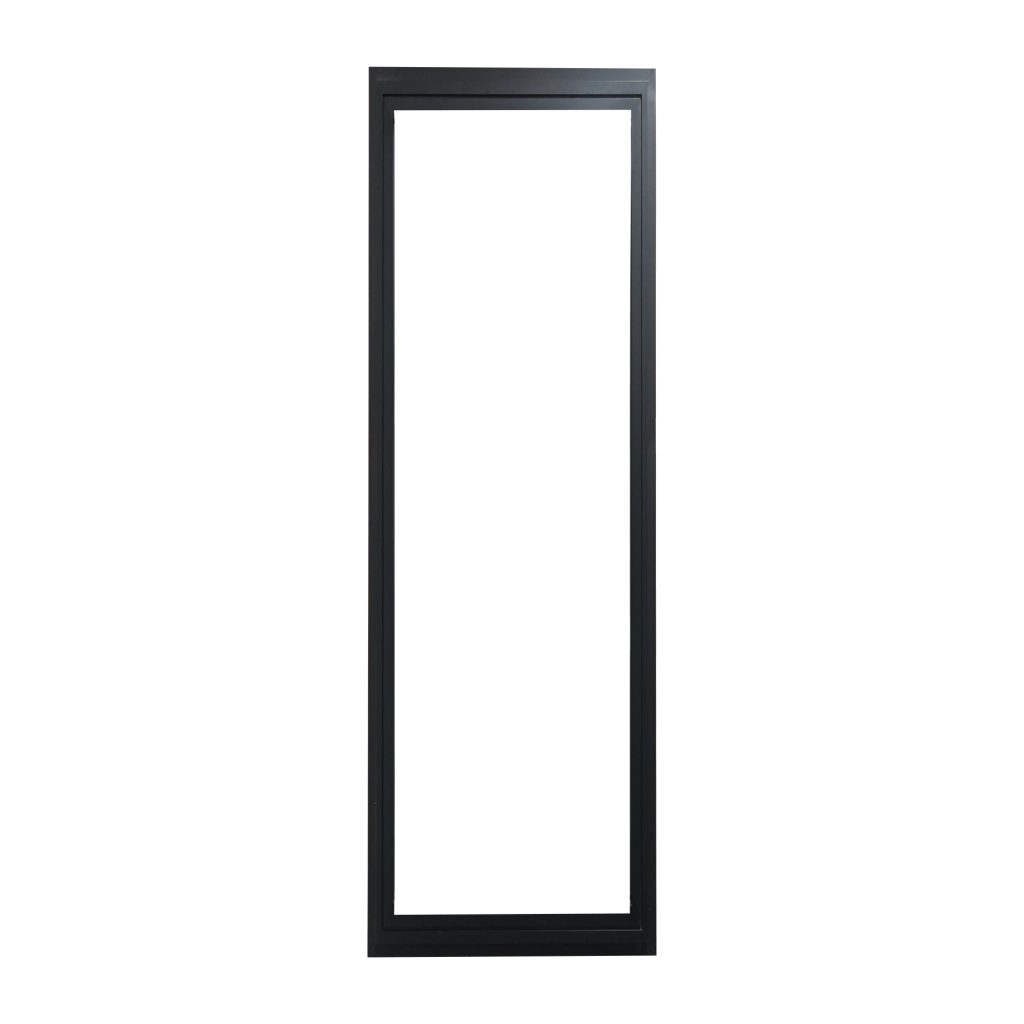
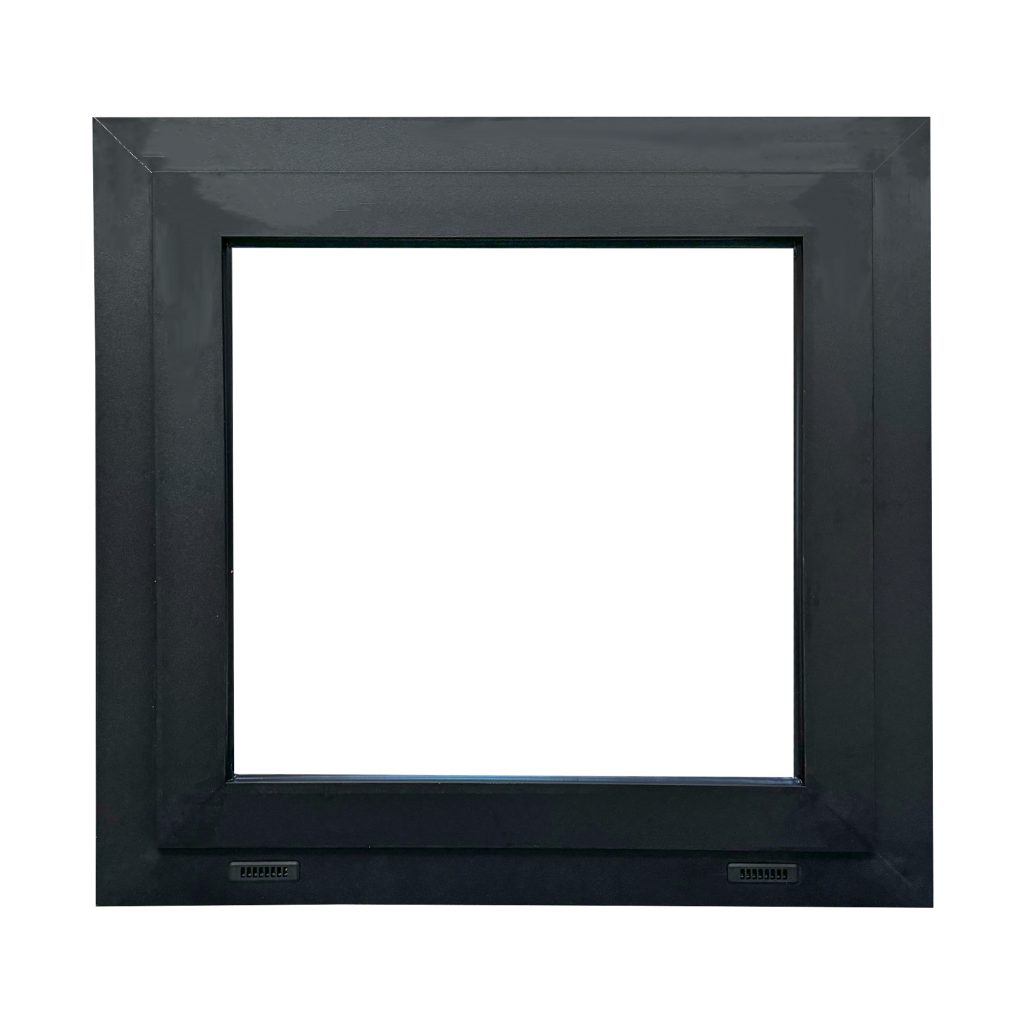
TEZA Doors and Windows offers the TEZA 83 Series single-hung window, featuring an aluminum frame, one movable sash, and one fixed sash. Available in different sizes, glass options, and finishes.
If you need Title 24 compliance windows, contact TEZA Doors & Windows:
- Phone: (818) 818 6001
- Email: Sales@Tezadoors.com
Showrooms
- 8210 Haskell Ave, Van Nuys, CA 91406
- 1544 E Warner Ave, Santa Ana, CA 92705
This guide is general information, not legal or code advice. Confirm requirements with your local building department before you order.
FAQs
Which Is Better, Single Hung vs Double Hung Windows?
Neither wins in every home. Single-hung suits tighter budgets and simple rooms, while double-hung suits upstairs rooms and homes that want more control over airflow.
What Is the Main Difference between Single Hung and Double Hung Windows?
The number of moving sashes. A single-hung window moves only its bottom sash, and a double-hung window moves both its top and bottom sashes.
Are Single-Hung Windows Cheaper?
Usually yes, because they have fewer moving parts. The gap depends on size, frame, and glass, so compare quotes for matching windows.
How Do I Know if My Windows Are Double-Hung or Single-Hung?
Unlock the window and push the top sash down. If it moves, the window is double-hung. If it stays fixed, it is single-hung.
Are Double-Hung Windows Worth It?
They can be, for upstairs rooms, where tilt-in sashes ease cleaning, and the top sash adds airflow control. For ground-floor rooms, single-hung usually saves money.
Are Single-Hung Windows More Energy Efficient?
Not by style alone. A fixed top sash can reduce air leaks, but glass, frame, and installation matter more, so compare the NFRC label numbers.
Do Single-Hung Windows Tilt In for Cleaning?
Some do, usually only the bottom sash. The fixed top sash still needs outside access, so ask the maker whether your exact model tilts.
Are Single-Hung Windows Outdated?
No. Single-hung windows remain a common style and suit budget projects and rooms where bottom ventilation is enough, such as kitchens.
Do I Need a Permit to Replace Windows in California?
Often, several California cities require a permit for window replacement, but rules differ, so check with your building department before ordering.


Leave a Reply