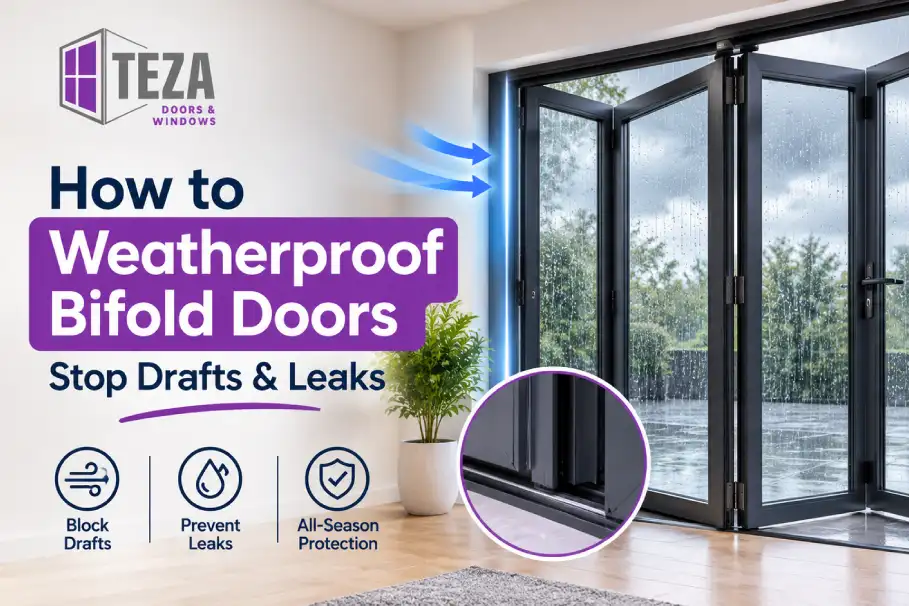


How to Weatherproof Bifold Entrance Doors: Stop Drafts & Leaks
If you’re wondering how to weatherproof bifold entrance doors, start by checking the rubber seals, panel alignment, bottom track, and drainage openings. Most minor drafts and leaks can be fixed by replacing worn weatherstripping, correcting alignment issues, and clearing blocked drainage channels.
This guide covers each repair step, explains how different bifold hardware systems work, and shows how to prepare exterior doors for the weather conditions common across Southern California.
Quick Answer: How Do You Weatherproof Bifold Entrance Doors?
- Inspect the rubber gaskets and replace flattened or cracked seals.
- Check panel alignment and adjust the hardware only according to the manufacturer’s instructions.
- Clean the bottom track and unblock exterior weep holes.
- Repair damaged exterior caulking without covering drainage openings.
- Check the threshold, bottom sweep, and locking system for gaps.
Why Are Your Bifold Doors Drafty or Leaking?
Bifold doors have multiple panels connected by hinges, along with several sealing points around the frame and tracks. These moving connections create more opportunities for air and water infiltration than a single-panel door.
If you’re trying to figure out how to stop draft from bifold doors, inspect these three common problem areas first:
1. Worn or Damaged Weather Seals
Rubber seals gradually lose their flexibility through repeated use and exposure to sunlight. Once they become flattened, cracked, or loose, they may no longer compress properly when the panels close.
2. Misaligned Panels and Frames
A sagging panel or loose hinge can create uneven gaps between the folding leaves. Even a small alignment problem can prevent the locking system from pulling the panels tightly against their seals.
3. Blocked Bottom Track Drainage
Exterior bifold doors often have drainage channels that collect rainwater and direct it outside through small openings. Dirt, leaves, and sand can block these openings, allowing water to accumulate inside the track.
The following table connects common symptoms with their likely causes and appropriate fixes.
| Symptom | Likely Cause | Recommended Fix |
| Whistling wind between panels | Flattened gasket or loose hardware | Replace the gasket and inspect alignment |
| Water pooling inside the bottom track | Blocked weep holes | Clean the track and drainage openings |
| Drafts around upper or lower corners | Misaligned panels | Check the frame and permitted hardware adjustments |
| Rattling during strong winds | Loose locking hardware | Inspect multipoint locks and strike plates |
| Daylight beneath the door | Damaged bottom sweep | Replace the compatible brush or rubber seal |
If these problems continue after basic maintenance, the door frame, threshold, or installation may require professional inspection.
How to Weatherproof Bifold Entrance Doors?
Follow these 4 steps to reduce drafts, prevent water leaks, and improve your bifold doors’ weather resistance:
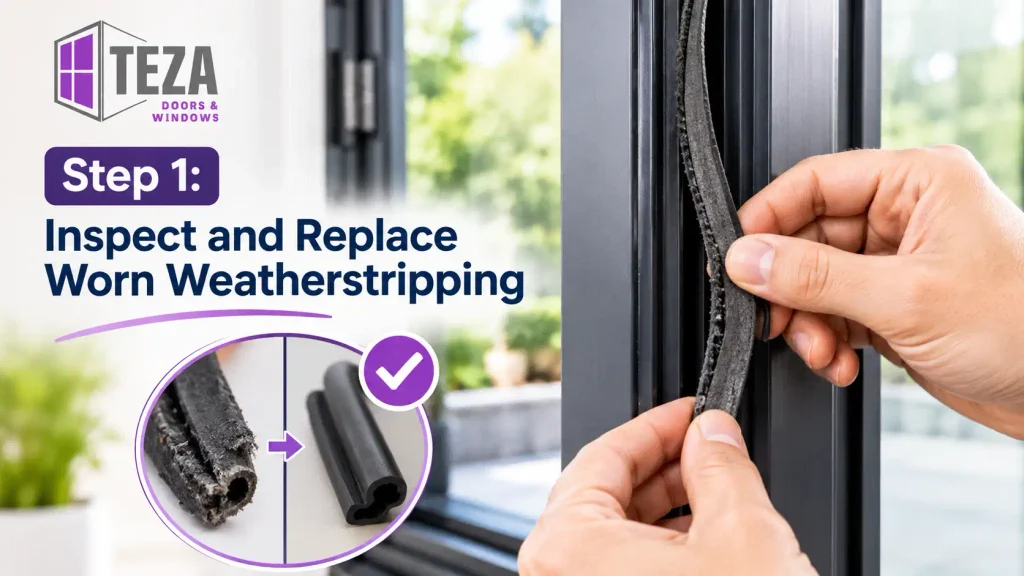
Step 1: Inspect and Replace Worn Weatherstripping
Weatherstripping creates a flexible barrier between the folding panels and the surrounding frame. When it deteriorates, outside air and moisture can enter even when the door appears fully closed.
The correct weatherstripping for bifold doors depends on the original gasket profile, the location of the gap, and the door manufacturer’s specifications.
How to Check Existing Door Seals
Start with a visual inspection of these areas:
- Vertical joints where folding panels meet.
- Perimeter seals between the outer panels and frame.
- Top and bottom edges of the operating panels.
- The bottom sweep and threshold.
You can also use the dollar bill test to identify weak sealing points.
Close the door on a dollar bill and gently pull it. If it slides out without resistance, the seal may not be compressing properly. Repeat this test at several points around the door to identify uneven sealing.
Which Weatherstripping Material Should You Use for Bifold Doors?
Different gasket profiles serve different purposes.
| Seal Type | Main Function | Typical Application |
| EPDM rubber bubble gasket | Creates a flexible compression barrier | Panel edges and perimeter gaps |
| Q-Lon foam seal | Compresses to reduce air movement | Compatible frame and panel channels |
| Brush fin weatherstrip | Reduces drafts and dust infiltration | Bottom sweeps and selected track interfaces |
Before purchasing replacement material, compare its dimensions and profile with the original gasket. A seal that is too thick can prevent panels from closing or interfere with the multipoint locking system.
Avoid cheap self-adhesive foam tape. Folding panels move repeatedly against their seals, which can crush the foam, loosen the adhesive, and leave debris inside the track. Manufacturer-compatible push-in EPDM gaskets or specified replacement seals are generally more suitable.
For homeowners comparing insulation features across different patio door styles, TEZA also explains how French door seals and frames affect energy efficiency.
Step 2: Adjust Hinges and Rollers to Close Panel Gaps
Misaligned panels can leave openings even when the weatherstripping is still in good condition. However, bifold door hardware is not identical across manufacturers, so identifying the track configuration is essential before attempting adjustments.
Check the manufacturer’s warranty first. Some brands require professional adjustments or authorized service. DIY alterations to hinges, rollers, or carrier assemblies may affect warranty coverage.
Identify Whether Your Bifold Door Is Top-Hung or Bottom-Rolling
- Top-hung systems: The door panels are supported by carriers running along an overhead track. The bottom guide generally controls movement and alignment rather than supporting the main door weight.
- Bottom-rolling systems: The panels are supported by rollers running along the bottom track. The upper track guides the panels and helps maintain their position.
The adjustment screws and hardware locations differ between these configurations. For example, TEZA’s 75 Series uses a bottom-hung rolling system, so adjustment instructions for a top-hung door should not automatically be applied to it.
How to Make Safe Panel Alignment Adjustments
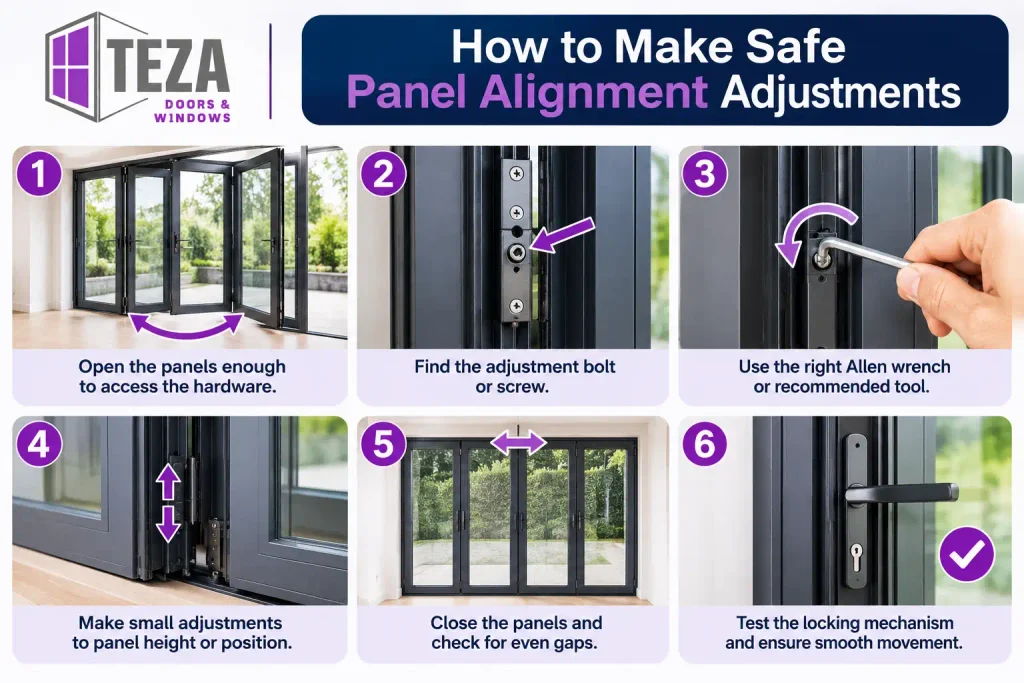
If your manufacturer permits homeowner adjustments, follow the specific instructions supplied with your door.
- Open the panels enough to access the designated adjustment hardware.
- Identify the adjustment bolt or screw specified in the product manual.
- Use the correct Allen wrench or other recommended tool.
- Make small adjustments to the panel height or lateral position only if the hardware supports them.
- Close the panels and check whether the gaps are even.
- Test the locking mechanism and confirm that the panels move smoothly.
Some systems allow height adjustments through carrier assemblies, while others use adjustable roller mechanisms or pivot brackets.
Do not assume that turning a top pivot or bottom roller pin will move every door panel in the same direction. Avoid forcing unidentified screws or making large adjustments without checking the manufacturer’s instructions.
If your panels are becoming difficult to move, TEZA’s guide on how to keep bifold doors from sticking covers track cleaning, roller inspection, and routine maintenance.
Check Whether the Panels Are Square
Use a spirit level to inspect the frame and check whether the panel edges remain parallel with the surrounding structure.
If the panels continue to rub, sag, or leave uneven gaps, a qualified installer should inspect the hardware and frame.
For additional guidance, see TEZA’s step-by-step article on how to adjust bifold doors.
Step 3: Clear Bottom Track Weep Holes and Drainage
A bifold door water leaking at bottom problem does not always mean the weather seals have failed. In many exterior systems, the bottom track is designed to collect some rainwater and direct it outside through dedicated drainage channels.
When these channels become blocked, water can accumulate and eventually overflow toward the interior.
How to Clean Bifold Door Drainage Channels
Follow these steps to restore the intended drainage path:
- Open the panels to access the bottom track.
- Vacuum loose dirt, leaves, sand, and other debris.
- Wipe the track with a soft cloth and mild soapy water.
- Locate the exterior weep holes and drainage slots.
- Remove visible debris with a soft brush or flexible plastic zip tie, if approved by the manufacturer.
- Check that the openings are clear and water can drain toward the exterior.
Avoid thick grease and indiscriminate use of WD-40 on tracks or weather seals. These products may leave residue or affect components that are not designed for them.
The Fenestration and Glazing Industry Alliance (FGIA) provides care recommendations for windows and doors, including keeping drainage areas clean and following manufacturer maintenance instructions.
Never apply silicone over exterior weep holes. These openings are part of the drainage system, and blocking them can trap water inside the frame.
Weathered vs. Flush Thresholds: Which Protects Better?
The threshold plays an important role in managing water and air movement beneath an exterior bifold door. Its design should suit the entrance’s exposure, drainage requirements, and accessibility needs.
| Feature | Flush Threshold | Weathered or Rebated Threshold |
| Appearance | Nearly level with the floor | Includes a raised or recessed barrier |
| Accessibility | Easier for wheelchair and foot traffic | May create a small step |
| Water protection | Relies heavily on seals and drainage | Provides an additional physical barrier |
| Wind protection | Depends on the complete sealing system | Helps resist wind-driven water |
Step 4: Seal the Outer Frame and Perimeter Gaps
Sometimes water enters through the joint between the outer door frame and the surrounding wall rather than through the folding panels.
Inspect the exterior caulking around the frame, especially at the lower corners and where the aluminum frame meets the siding or exterior finish.
If the sealant is cracked or separating:
- Carefully remove the damaged caulk without scratching the aluminum.
- Clean away dust, dirt, and loose material.
- Allow the surface to dry completely.
- Apply a compatible 100% exterior silicone sealant.
- Follow the product’s curing instructions before exposing the joint to rain.
If water continues entering after resealing, have the sill and installation checked for incorrect flashing, drainage, or water-management details.
When to Upgrade Bifold Doors in Southern California?
Replacing a bifold door is not always necessary when drafts or minor leaks appear. However, repeated problems may indicate that the frame, hardware, or sealing system is no longer performing properly.
Consider replacement if you notice:
- Warped panels that cannot maintain even gaps.
- Severely corroded or damaged hardware.
- Cracked or deteriorated sills that cannot be repaired.
- Repeated water intrusion despite proper drainage maintenance.
- Persistent air leaks caused by an outdated sealing system.
- Failed insulated glass or damaged frame components.
For homeowners comparing weather rated exterior bifold doors southern california, the frame material, glazing, weather seals, and drainage design all deserve attention.
What to Look for in a Weather-Rated Aluminum Bifold Door
When comparing replacement systems, consider these features:
| Feature | Why It Matters |
| Thermally broken aluminum frame | Reduces heat transfer through the frame |
| EPDM compression seals | Help limit air and water infiltration |
| Multipoint locking system | Helps pull panels against their seals |
| Engineered drainage channels | Direct water away from the interior |
| Durable powder-coated finish | Protects the aluminum surface from environmental exposure |
For homeowners comparing weather-rated exterior bifold doors in Southern California, TEZA’s 120 and 150 Series feature heavy-duty extruded aluminum frames, polyamide thermal barriers, dual-sealed EPDM perimeter seals, and high-performance water drainage tracks. These features help reduce heat transfer, limit air and water infiltration, and manage rainwater around the door system.
Preparing Exterior Bifold Doors for Winter Storms
Use this checklist to prepare your doors and learn how to seal bifold doors for winter in Southern California:
- Inspect weather seals: Replace cracked, flattened, or missing gaskets.
- Check the locks: Make sure the locking system engages properly.
- Clean the tracks: Remove sand, leaves, and dirt.
- Clear drainage openings: Keep exterior weep holes unobstructed.
- Inspect exterior caulking: Repair cracks around the frame.
- Test panel movement: Check for sticking, rattling, or uneven gaps.
Keep Your Bifold Doors Ready for Southern California Weather
Tired of drafty, leaking patio doors that fail in bad weather? Explore TEZA’s high-performance aluminum bifold systems online, or visit our showrooms in Van Nuys and Santa Ana to see how our precision-engineered weather seals keep the elements outside.
Call TEZA: (844) 480-1839
Showrooms:
- Van Nuys: 8210 Haskell Ave, Van Nuys, CA 91406
- Santa Ana: 1544 E Warner Ave, Santa Ana, CA 92705
Frequently Asked Questions About Weatherproofing Bifold Doors
Can Existing Bifold Doors Be Weatherproofed Without Replacing Them?
Yes. If the frame and panels are structurally sound, replacing worn gaskets, correcting permitted alignment issues, and clearing drainage channels may resolve common drafts and minor leaks.
What Is the Best Weather Seal for Exterior Bifold Doors?
EPDM compression gaskets are commonly used because they provide a flexible sealing surface. However, the correct profile depends on the manufacturer’s original design and the location of the seal.
Can an Exterior Bifold Door Draft Excluder Stop Cold Air?
A compatible bottom sweep or brush seal can reduce air movement beneath the panels. It must fit the existing channel correctly without interfering with door movement or drainage.
Why Do Bifold Doors Leak Only During Heavy Rain?
Wind-driven rain can push water toward the door and its drainage system. Blocked weep holes, damaged gaskets, incorrect installation, or an unsuitable threshold may allow water to enter.
Should Homeowners Adjust Bifold Door Rollers Themselves?
Only when the manufacturer permits DIY adjustments and provides instructions for the specific hardware. Top-hung and bottom-rolling systems use different mechanisms, and incorrect adjustments can damage the door.
How Often Should Exterior Bifold Doors Be Maintained?
Inspect the seals, tracks, drainage openings, and hardware every few months. Properties exposed to coastal air, dust, and frequent storms may need more frequent cleaning.


Leave a Reply