

French doors bring natural light into your home, but drafts and heat loss can affect their efficiency. So, are french doors energy efficient? Yes, with the right glass, frame, weatherstripping, and installation.
In this article, we explain what affects their energy performance and how to choose and maintain efficient French doors.
Quick answer: Are french doors energy efficient? They can be. Look for insulated glass, a frame that limits heat transfer, reliable weatherstripping, and verified energy ratings.
Why Are French Doors Considered Drafty?
Older French doors often had single-pane glass, basic locks, and wood frames that changed shape with temperature and humidity.
Common causes of drafts include:
- Warped frames: Wood can swell, shrink, or twist over time.
- Worn weatherstripping: Old seals may crack or flatten, leaving gaps.
- Center-panel gaps: The joint between the two door leaves can allow air through.
- Poor installation: Misaligned hinges or an uneven frame can prevent a tight closure.
- Damaged thresholds: Gaps beneath the door can let in outside air.
These problems explain why some homeowners wonder, are french doors drafty? They can be when seals are worn or the door is poorly fitted, but the style itself does not automatically cause air leakage.
What Makes French Doors Energy Efficient?
The most energy efficient french doors combine several features that work together to reduce heat transfer and air leakage:
1. Thermally Broken Aluminum Frames
Aluminum is strong and durable, but it conducts heat readily. Without an insulating barrier, heat can pass through the frame between the outdoor and indoor surfaces.
Thermally broken frames use an insulating material, often a polyamide strip, to separate the inner and outer aluminum sections. This reduces heat transfer while retaining the strength and slim appearance of aluminum.
When comparing products, check:
- Whether the frame includes a thermal break.
- The complete door’s U-factor rating.
- The quality of the weather seals.
- The manufacturer’s performance documentation.
2. Insulated Low-E Glass
According to the U.S. Department of Energy, energy-efficient glazing technologies, including double-pane glass and Low-E coatings, can help reduce heat transfer and improve indoor comfort. The right glazing option depends on your climate and the door’s overall design.
Look for these features:
- Double-pane glass: Two panes separated by a sealed space reduce heat transfer.
- Low-E coating: A thin, low-emissivity coating helps manage radiant heat while allowing natural light through.
- Argon gas: Some insulated glass units use argon between the panes to improve insulation.
- Warm-edge spacers: These help reduce heat transfer around the edges of the glass.
Triple-pane glazing may provide additional insulation, but it is not essential for every climate or project. Compare the complete door ratings and choose glazing suited to your home’s conditions.
3. Multi-Point Locking Systems
A multi-point locking system helps improve the energy efficiency of French doors by pulling the panels tightly against the weatherstripping. This creates a more consistent seal and reduces air leakage around the door.
4. Astragals, Weatherstripping, and Thresholds
French doors have several areas where air can enter if the seals are inadequate.
- Weatherstripping: Creates a flexible barrier around the door perimeter.
- Astragal: Helps seal the joint between the two door panels.
- Threshold: Closes the gap at the bottom of the opening.
- Door sweep: Helps reduce air movement beneath the door.
Inspect these components regularly. Cracked seals, loose hardware, or an uneven threshold can reduce the energy efficiency of French doors by allowing drafts and increasing unwanted heat transfer, even when the glass and frame are in good condition.
For a closer look at available frame and glazing options, explore TEZA’s energy efficiency of French doors.
Are French Doors Energy Efficient in Older Homes?
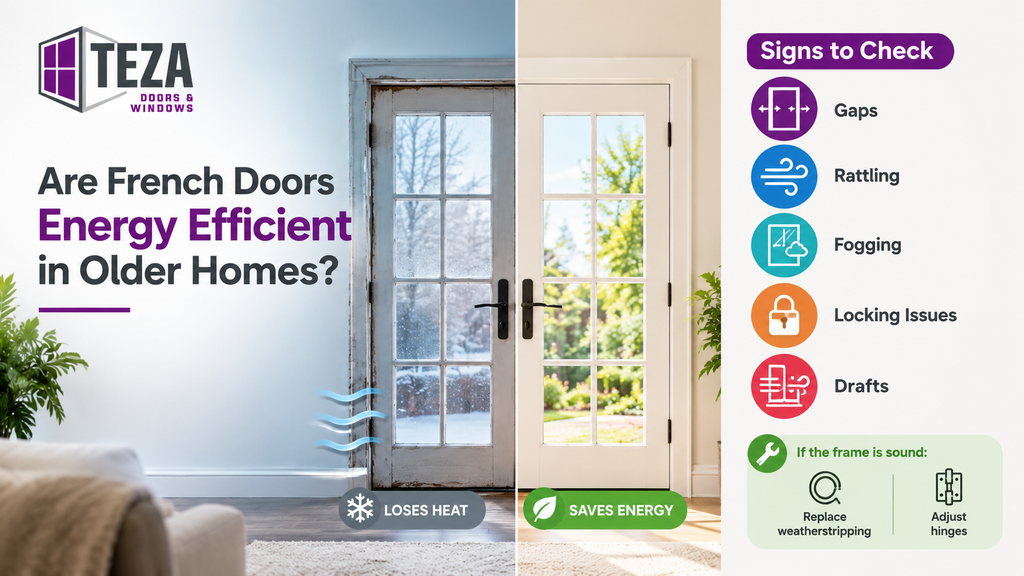
The answer depends on the condition of the existing door. Older French doors with single-pane glass, damaged seals, or warped frames are more likely to lose heat and allow drafts.
Before deciding whether to replace your existing French doors with a new, more energy-efficient door system, check for:
- Visible gaps around the frame or between the panels.
- Rattling when wind hits the door.
- Fogging between glass panes.
- Difficulty locking the panels.
- Drafts near the threshold.
If the frame is sound, replacing weatherstripping or adjusting the hinges may be enough. If the frame is badly warped or the insulated glass has failed, replacing the entire unit may be more practical.
French Doors vs. Sliding Doors: Which Saves More Energy?
Homeowners often ask, are sliding doors more energy efficient than french doors? Neither style is automatically more efficient. Energy performance depends on the frame, glass, weatherstripping, installation, and the quality of the complete door system.
French doors typically use hinged panels with compression seals, while sliding doors rely on weatherstripping along moving panels and tracks. Both designs can provide effective insulation when properly manufactured and maintained.
| Feature | French doors | Sliding patio doors |
| Opening style | Hinged panels swing inward or outward | Panels slide along a track |
| Sealing method | Compression seals around the frame and panels | Weatherstripping around the moving panels |
| Common maintenance | Hinges, locks, and perimeter seals | Tracks, rollers, and weatherstripping |
| Space needed | Requires clearance for the door swing | Usually needs less clearance |
| Energy performance | Depends on the complete assembly | Depends on the complete assembly |
Which should you choose?
- Choose French doors if you prefer a traditional hinged design and have enough space for the panels to swing.
- Choose sliding doors if saving clearance space is a priority.
- Compare U-factor, SHGC, and air leakage ratings instead of assuming one style is always more efficient.
A well-sealed French door can outperform a poorly maintained sliding door. The reverse can also be true.
For more details on design, operation, and practical differences, see TEZA’s guide to patio doors vs. sliding doors.
How to Read Energy Ratings: U-Factor and SHGC
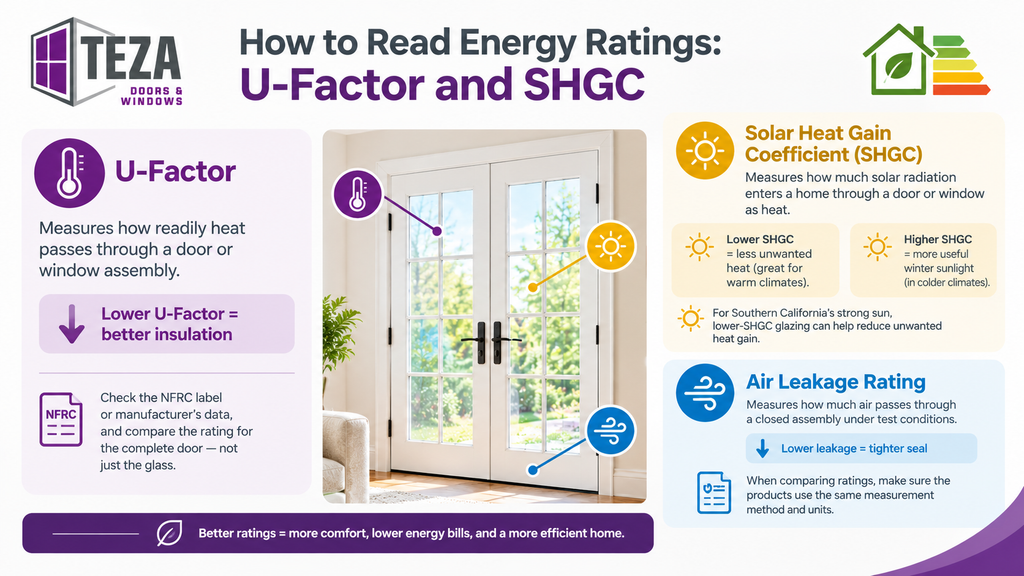
Energy ratings help you compare products using standardized measurements. Check the National Fenestration Rating Council (NFRC) label or the manufacturer’s published test data.
U-Factor
According to the U.S. Department of Energy, U-factor measures how readily heat passes through a door or window assembly. A lower U-factor indicates better resistance to heat transfer.
When comparing French doors, check the rating for the complete door rather than the glass alone. The right value depends on your climate and the available product options.
Solar Heat Gain Coefficient (SHGC)
SHGC measures how much solar radiation enters a home through a door or window as heat.
- Lower SHGC: Helps limit unwanted solar heat in sunny, warm climates.
- Higher SHGC: May be useful where capturing winter sunlight is desirable.
For homes exposed to strong Southern California sun, lower-SHGC glazing may help reduce unwanted heat gain.
Air Leakage Rating
This rating measures how much air passes through a closed assembly under specified test conditions. Lower leakage generally indicates a tighter seal.
When comparing ratings, make sure the products use the same measurement method and units.
How to Make Existing French Doors More Energy Efficient
If your existing doors are structurally sound, you may be able to improve their performance without replacing the entire unit. When considering how to make french doors more energy efficient, start by identifying where air leaks occur.
- Replace worn weatherstripping. Choose compatible seals that compress properly when the door closes.
- Adjust hinges and locks. Correcting misalignment can help the panels meet the frame evenly.
- Check the threshold and door sweep. Replace damaged parts and adjust them where the product allows.
- Seal gaps around the frame. Use suitable caulk or approved sealing materials where the frame meets the surrounding wall.
- Consider solar-control window film. Film may reduce unwanted solar heat, but confirm compatibility with the existing glass before installation.
After making adjustments, check that the seals contact evenly and the door locks without excessive force. If drafts remain, a professional inspection can help identify the source.
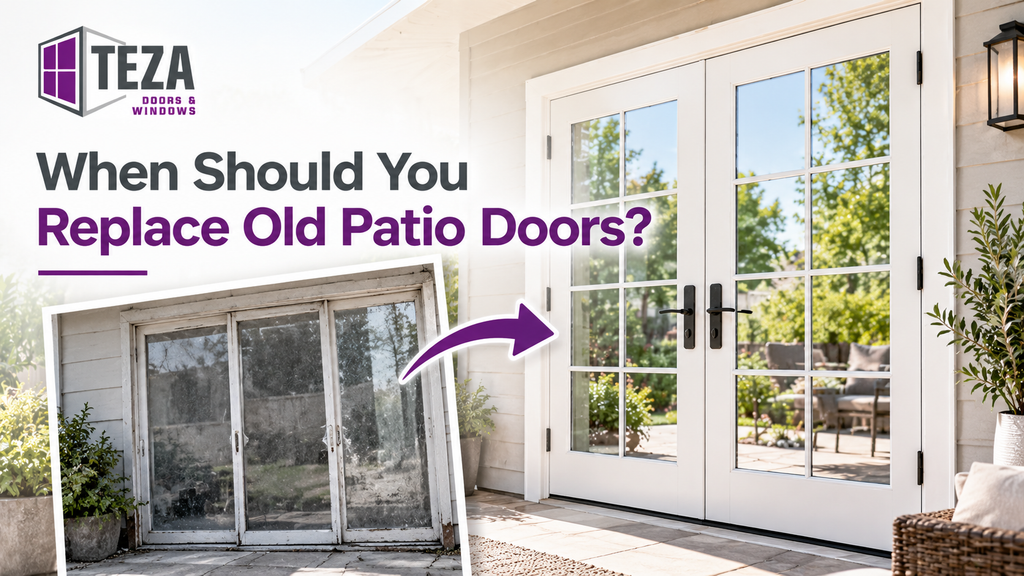
When Should You Replace Old Patio Doors?
Repairs may be sufficient when the problem is limited to worn seals or adjustable hardware. Replacement is worth considering when multiple components have failed.
Watch for these signs:
- Fogging between panes of insulated glass.
- Severe frame warping or deterioration.
- Persistent drafts after repairs.
- Panels that no longer close or lock properly.
- Repeated problems with damaged seals.
When shopping for energy efficient exterior french doors, compare the complete door’s ratings, frame construction, glass specifications, and locking system.
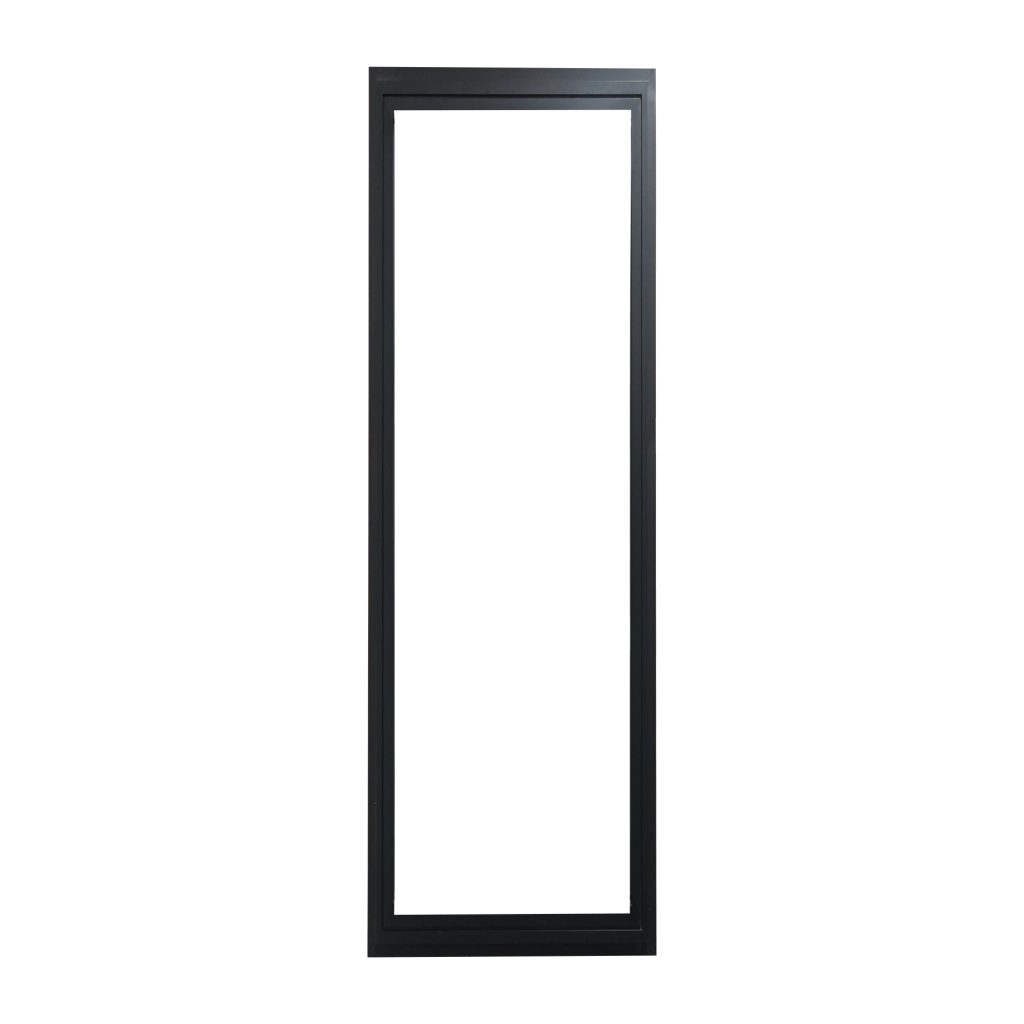
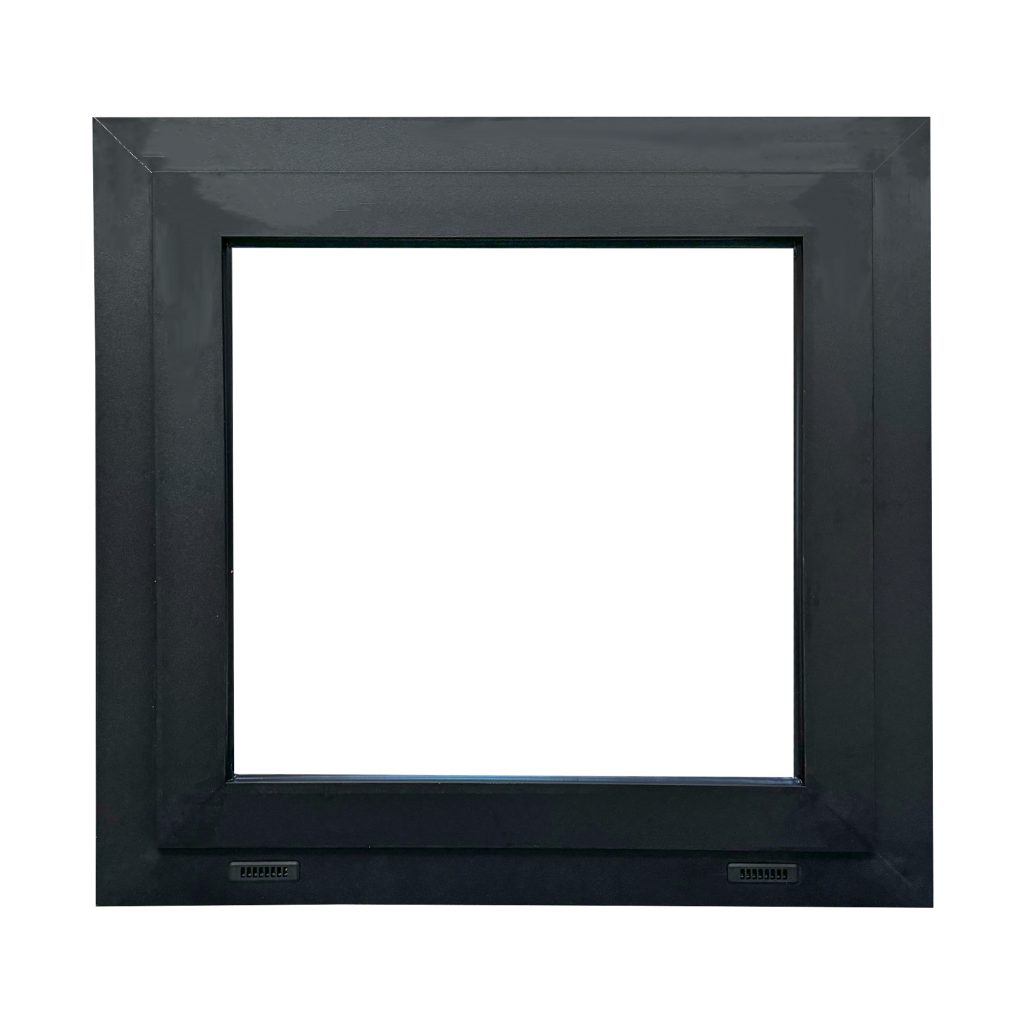
TEZA’s 65 Series French doors are one option to review when considering a thermally broken aluminum system. Confirm the exact glazing, hardware, and performance specifications for the configuration you intend to purchase.
Before ordering, also check standard French door sizes and verify the unit dimensions and rough opening requirements for your project.
Choose French Doors Based on Performance
French doors can bring natural light and a classic look to your home without automatically compromising indoor comfort. Their performance depends on the entire system—not just the door style or frame material.
So, are french doors energy efficient? Yes, when the product is properly specified, installed, and maintained. Compare verified ratings, inspect the seals, and choose glazing that suits your climate.
If you’re planning a patio upgrade, explore TEZA’s French door options or contact the team to discuss the right configuration for your project.
TEZA Doors and Windows
- Van Nuys showroom: 8210 Haskell Ave, Van Nuys, CA 91406
- Hours: Monday–Friday, 8:30 AM–5:00 PM
- Phone: (844) 480-1839
- Email: [email protected]
The supplied brief lists the Santa Ana showroom at 1544 E Warner Ave, Santa Ana, CA 92705, as opening soon. Confirm its current status before visiting.
Frequently Asked Questions
Are French doors more drafty than regular exterior doors?
Not necessarily. Properly installed French doors with effective weatherstripping and secure locking hardware can limit air leakage. Older doors may develop drafts around the central joint, frame, or threshold.
Do French doors let in too much heat in summer?
They can if the glazing allows excessive solar heat gain. Low-E glass with an appropriate SHGC rating can help control incoming solar heat while preserving natural light.
What is a good U-factor for energy-efficient French doors?
A lower U-factor generally means better insulation. Compare the complete door ratings and select a product suited to your climate rather than relying on a single number as a universal standard.
Is aluminum a good material for energy-efficient French doors?
Yes, especially when the frame includes a thermal break. This insulating barrier reduces heat transfer between the interior and exterior aluminum sections while retaining the material’s strength.
Are Exterior French Doors Energy Efficient?
Yes. Exterior French doors can perform well when they have insulated glazing, a suitable frame, effective weatherstripping, and secure locking hardware. Correct installation and climate-appropriate glass are also important.
How can I tell if my French doors are leaking air?
Look for damaged seals, visible gaps, rattling during windy weather, or drafts around the frame and threshold. A professional can identify less obvious leaks and determine whether repair or replacement makes more sense.

Leave a Reply